Culture: The First Lever of an Effective ERG
Culture. The primary lever through which an ERG influences the organization and yet often the least formally defined.
In practice, it is not established through statements or programming, but through repeated interactions that signal what is expected, what is acceptable, and what is valued within the group.
For ERG leaders, culture becomes visible in how participation unfolds over time. Members make ongoing decisions about whether to contribute, remain silent, or disengage entirely. Those decisions are shaped by the environment they encounter, particularly in moments where perspective, disagreement, or vulnerability are introduced. The way those moments are handled carries more weight than any planned agenda.
This places a high degree of responsibility on facilitation. The structure of a conversation, the responsiveness of leadership, and the consistency of inclusion all contribute to whether members experience the ERG as a space where engagement is worthwhile. Over time, these signals accumulate into a pattern that defines the group’s culture more clearly than any stated intention.
Evaluating cultural effectiveness requires attention to behavior rather than activity. Attendance alone is not a sufficient indicator. More useful signals include the distribution of participation, the consistency of engagement across meetings, and whether members return after initial involvement. Feedback mechanisms such as surveys can provide additional context, but observable patterns often reveal the underlying dynamics more directly.
Culture within an ERG is not static. It is continuously reinforced or reshaped through interaction, which makes it both highly influential and highly dependent on leadership attention.
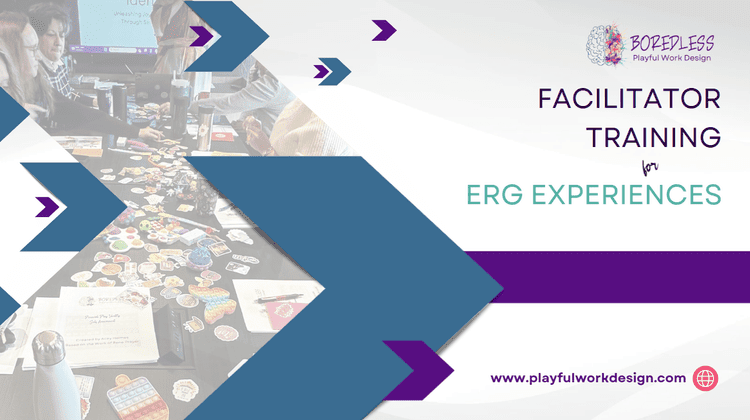
A practical resource
If you’re thinking about how this shows up in the way your ERG meetings are experienced, I’ve put together a resource that focuses on small, practical ways to shift participation, energy, and interaction.
It’s designed to support how you approach conversations over time—not something to run as-is.